Materials · · 5 min read
How to choose the floor of a home that gets lived in
Terracotta, wood or stone: what matters more than the catalogue photo, and how to care for each one so it lasts for decades.
By Marta Ferrer, Interior designer (demo person)

In this article
A floor is chosen barefoot, not from a photo. It is what you touch most in a home, what you see most and the most expensive thing to change, so it deserves a week of testing before you decide.
Our usual advice: ask for a sample of each candidate and leave them by the front door. Step on them when you come in from the street, spill a coffee on them, drag a chair across. In seven days you will know more than any catalogue can tell you.
Questions to answer first
Before talking about materials, it helps to answer three questions, because they decide almost everything else.
- How is the home lived in? With children, a dog or lots of people coming and going, the floor has to be forgiving.
- Is there underfloor heating? If so, not every material works equally well: stone and terracotta carry heat well; solid wood, less so.
- Do you want continuity? One floor throughout makes a home feel larger. Changing material in the kitchen or bathroom gives it order.

Terracotta
It is the floor of old Valencian village houses and the one that ages best. It is warm underfoot, can be repaired tile by tile and every tile is slightly different.
- The good: it stands up to real use and improves with the years.
- What it needs: a wax or oil treatment every few years, depending on use.
- Where not: in an untreated shower; it absorbs water.
Oiled oak
Wood is the floor you notice most when walking: soft, warm and quiet. Oiled oak does mark, but it can be sanded back to new, which a laminate floor never allows.
A wooden floor with marks is a used floor, not a ruined one.
If the home gets a lot of southern light, expect the oak to turn golden over time. We like it; people who want a fixed colour, less so.
Travertine and other stones
Stone is cool in summer, hard and almost eternal. Travertine has pores which, on a floor, are filled so they do not collect dirt. The finish decides how it feels: polished shines and is more slippery; honed is matt and grips.
Microcement and encaustic tiles
These are the two floors we are asked for most after the three above, and they could not be more different.
Microcement is continuous: no joints, from the living room into the shower if you like. It is a thin layer over the existing floor, which saves lifting and rubble. In return, it needs a very stable base. If the substrate moves, a crack appears, and a crack in a continuous floor shows far more than a joint.
Encaustic tiles are the opposite: piece by piece, patterned, and very often already in the home. In many renovations in the Ensanche or El Cabanyal the most valuable thing in the flat lies under 1970s terrazzo. Before deciding anything, we lift a tile in a corner to see what is there.
- Restoring them: they are lifted, cleaned, broken pieces are replaced with reclaimed ones and they are laid again. It takes time, but no new floor looks like it.
- Combining them: if there are not enough for the whole home, they become a tiled rug in the living room or hallway and the rest is solved with a plain floor that does not compete.
A floor’s budget is not just the material
When people compare two floors, they usually compare the price per square metre of the tile. It is the smallest part of the bill. What really changes the budget is everything around it:
- What has to come out. Lifting an old floor, removing rubble and levelling the base can cost more than the new floor.
- Height. A thicker floor means trimming doors and checking where it meets the bathroom and kitchen.
- Laying. Herringbone wood or patterned terracotta takes more hours than a straight lay.
- Maintenance. A floor that is oiled every few years has a cost that does not show on day one.
That is why, in our quotes, the floor comes with every item visible: removal, base, material, laying, skirting and finish. That way two options can be compared properly.

Four mistakes we see often
- Choosing with the sample in your hand. A twenty-centimetre piece does not tell you how a whole living room looks. If possible, ask for an open box laid on the floor.
- Forgetting the light. The same oak is honey in afternoon light and grey in north light. Look at samples at different times of day.
- Joints nobody thought about. A wide, dark joint draws a grid that dominates the floor itself.
- Changing floor at every door. Each change is a line on the floor. Two well-chosen materials beat five.
How to care for each one
A well-chosen floor is also a floor you know how to look after. These are the guidelines we leave in writing when we hand over a home:
- Terracotta: sweep often and mop with water and neutral soap. When it loses its sheen in walkways, it gets wax. No bleach or ammonia-based products.
- Oiled oak: a well-wrung mop and a soap for oiled wood, which nourishes as it cleans. Marks are sanded by hand locally and re-oiled.
- Travertine: neutral soap and nothing acidic. If it is honed, an oil stain is treated early with a stone product.
- Microcement: cleaned like any floor, but without scourers. Every so often the protective coat is renewed.
- Encaustic tiles: water and neutral soap. If they have been restored, seal them well the first time, because old tiles absorb more.
One rule for all of them: felt pads under chair legs and a mat at the door. It is the cheapest thing that protects a floor and the first thing people forget.
How we decide at Lindero
On every renovation we bring the sample board to your home before you sign. We lay the pieces on the real floor, in the real light, next to the joinery wood and the wall colour. That is where a floor gets chosen.
One last thing: choose the skirting together with the floor. It finishes the meeting with the wall, and it is what shows most when it is badly done.
Questions we get asked
Can a new floor go over the old one?
Sometimes, if the old one is firm and the door heights allow it. We check on the first visit.
Which floor works best with underfloor heating?
Stone and terracotta carry heat better. Wood can work, preferably in thin, well-dried boards.
Keep reading
-
Materials ·
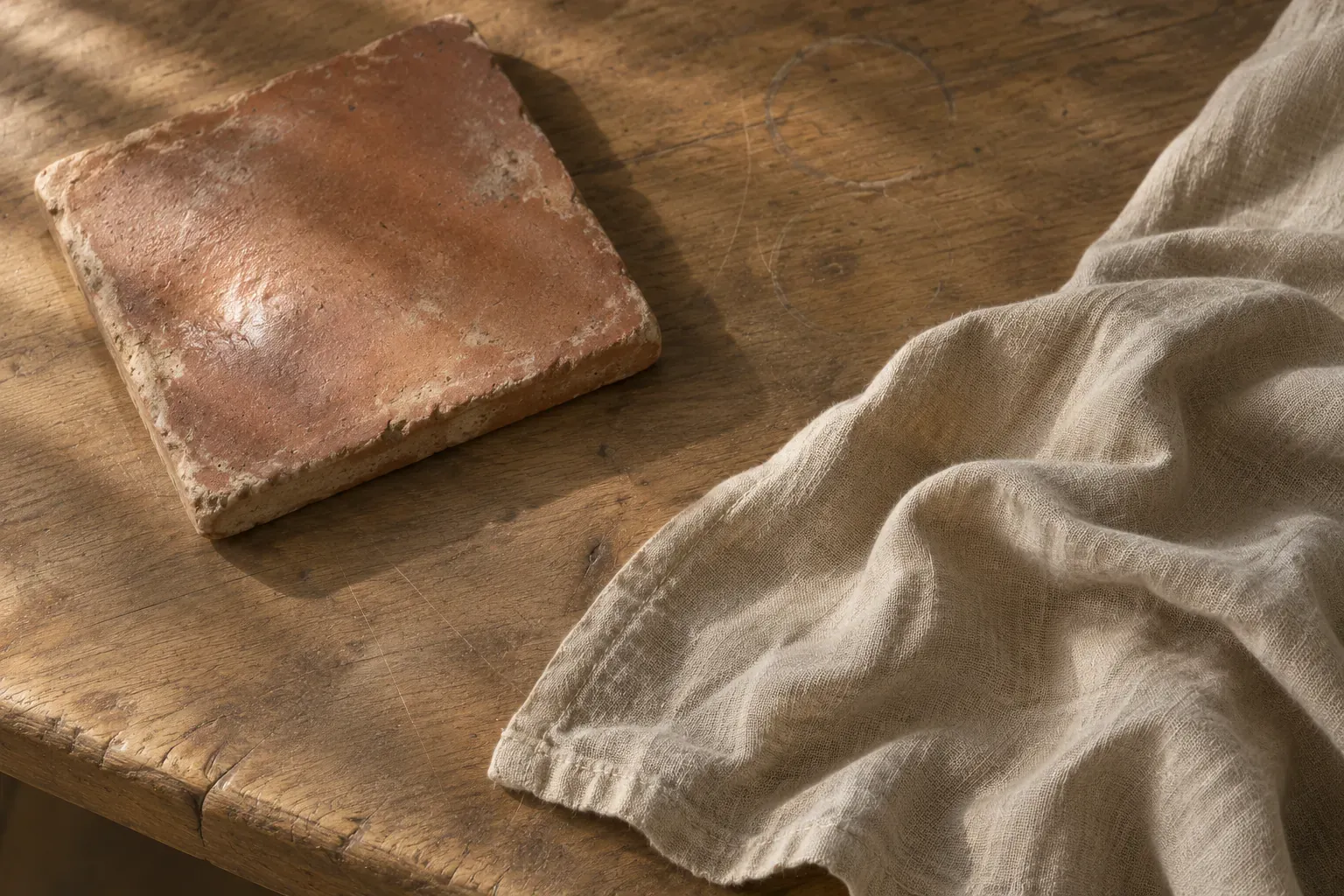
Linen, terracotta and oak: how natural materials age
Natural materials change with use. Knowing how they change is what lets you choose them without fear.
-
Materials ·
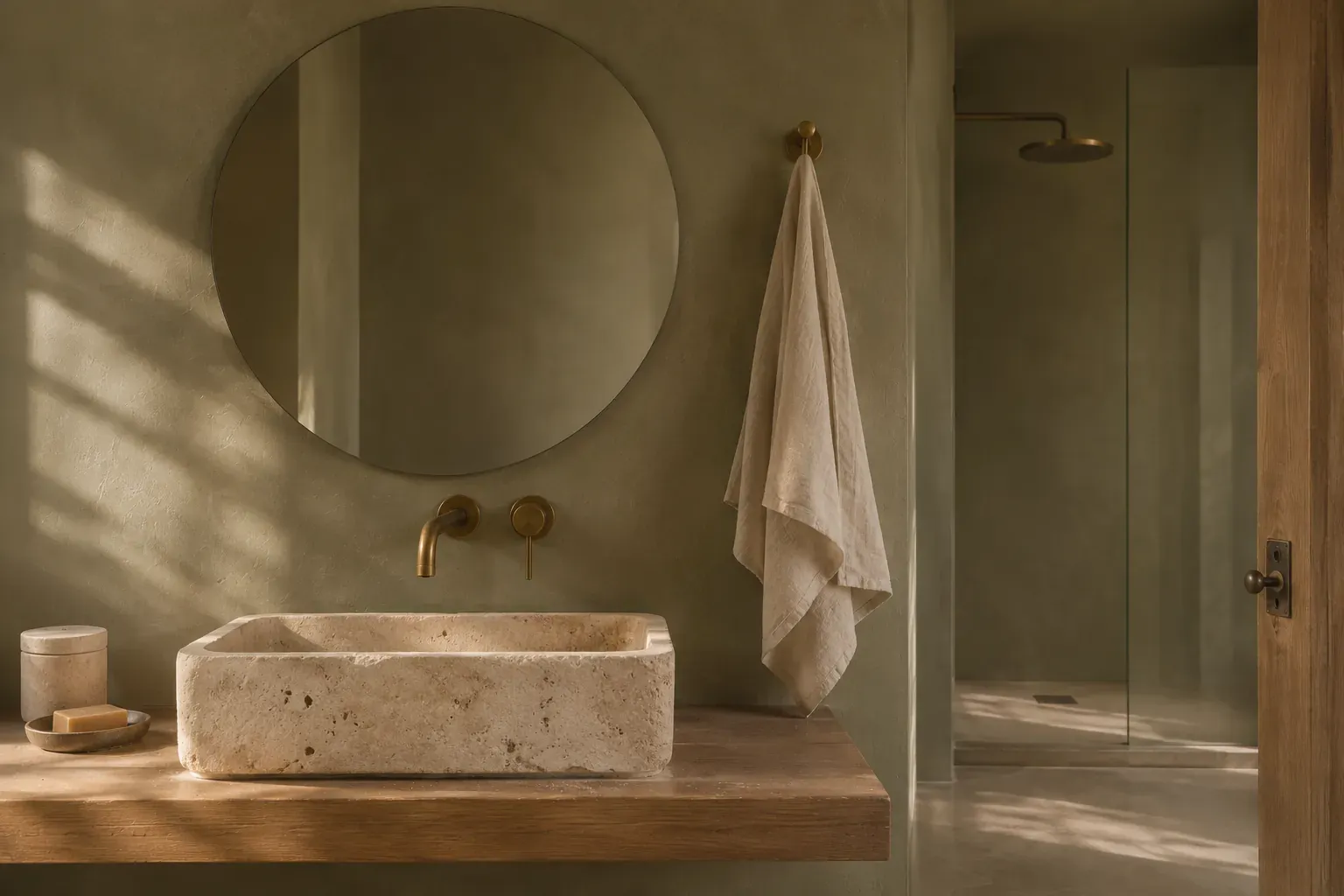
Travertine in the bathroom: what to know
Filling, sealing and finish: three decisions that make travertine last in the bathroom and grip in the shower.
-
Renovations ·
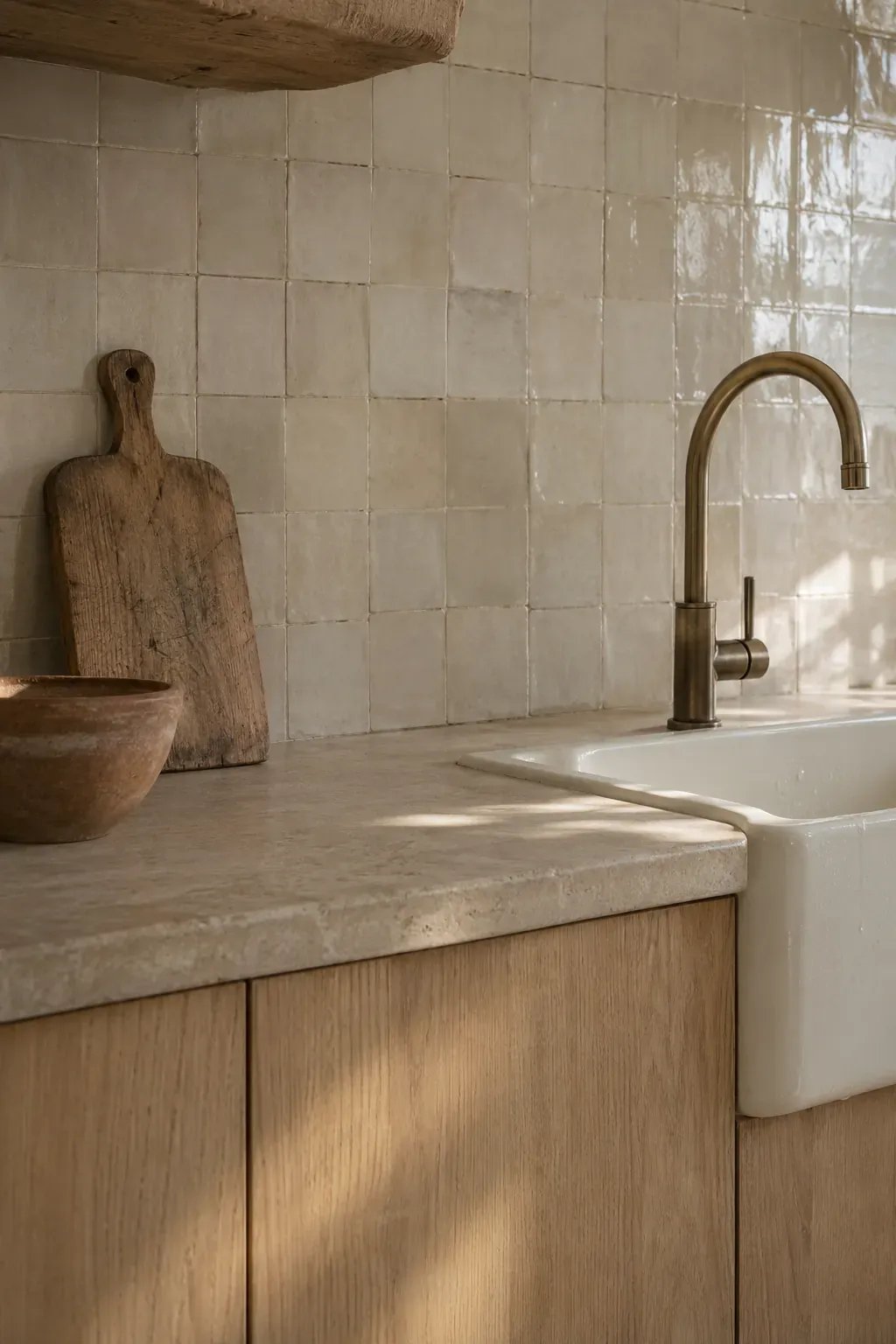
The open kitchen: when yes and when no
It gains light and space, but brings smells, noise and mess into view. Four questions to decide and three in-between solutions.


